

I almost cancelled my Rajasthan trip three times before I left the US. Once because a friend backed out, once because I read too many Reddit threads about solo travel in India, and once because I could not figure out whether to fly nonstop on Air India or take the cheaper one-stop through Doha. None of those reasons turned out to matter. What did matter was the planning I did in the six weeks before I flew — the route I chose, the budget I drew up in dollars, and a few small decisions about visas, train bookings, and stays that quietly shaped the entire trip.
This is the actual plan I used for ten days alone in Rajasthan last winter, the numbers I spent in USD, and the four things I would change if I were doing it again. I have written it the way I wish someone had written it for me when I was sitting at my kitchen table in Brooklyn with twelve browser tabs open and no idea where to begin.
Why Rajasthan Works for an American Solo Traveler
Rajasthan is one of the easier parts of India to travel alone as an American, and I say that as someone who was genuinely nervous about the idea. The tourist circuit is well established, English is widely spoken at hotels and major sites, and the cities are connected by frequent trains and domestic flights. You are rarely the only foreigner at a fort, a market, or a desert camp, and you will hear plenty of American and European accents along the way.
Before you book anything, check the current US State Department travel advisory for India and enroll in the Smart Traveler Enrollment Program (STEP), which is free and run by the State Department. I did both before I left, and not because I expected anything dramatic — reading the actual advisory makes you realize how routine most of the journey actually is. Solo travel here is closer to careful planning than constant caution, and the difference matters when you are deciding whether to go at all.
One thing to handle early: the Indian e-Tourist Visa. US citizens can apply online for a 30-day e-Tourist Visa at $25 from July through March, and a reduced $10 from April through June, plus a roughly 3% bank surcharge on the payment. The 1-year multiple-entry option is $40 and the 5-year is $80 if you think you will be back. Apply at least 4 days before arrival as required, but I would aim for 2 to 3 weeks of buffer so you are not refreshing your inbox the night before departure. You carry a printout through immigration.
Read: Is Travel A Frame Of Misfortune Or Gain?
The 10-Day Route I Settled On
After three weeks of comparing itineraries, I landed on a clockwise loop starting and ending in Delhi. I wanted to see forts, a desert, a lake, and at least one smaller town that was not on every Instagram reel. This is what I actually did:
- Day 1: Arrive Delhi (most US flights land late at night or very early morning). Recover from a 14 to 17 hour journey and adjust to the 10.5-hour time difference from the East Coast.
- Days 2 to 3: Jaipur — Amber Fort, City Palace, Hawa Mahal, and a long, slow evening at Nahargarh watching the sun drop over the Pink City.
- Day 4: Pushkar — short bus from Ajmer, one night by the lake. Quieter than I expected, and one of my favorite stops.
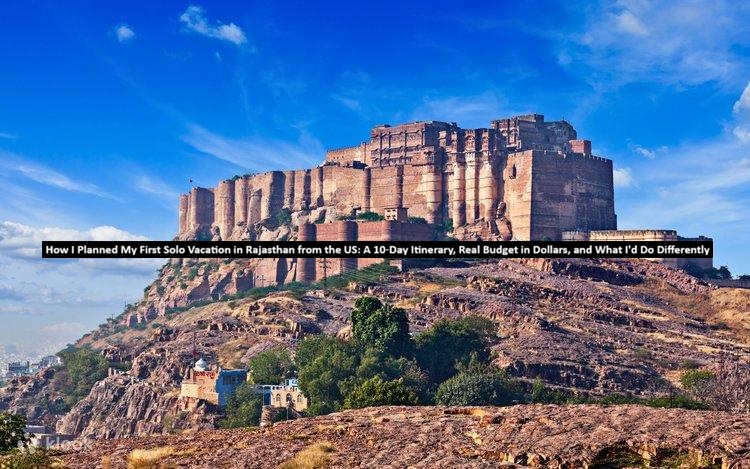
- Days 5 to 6: Jodhpur — Mehrangarh Fort took an entire morning, and walking the blue lanes of the old city below it took the rest of the day.
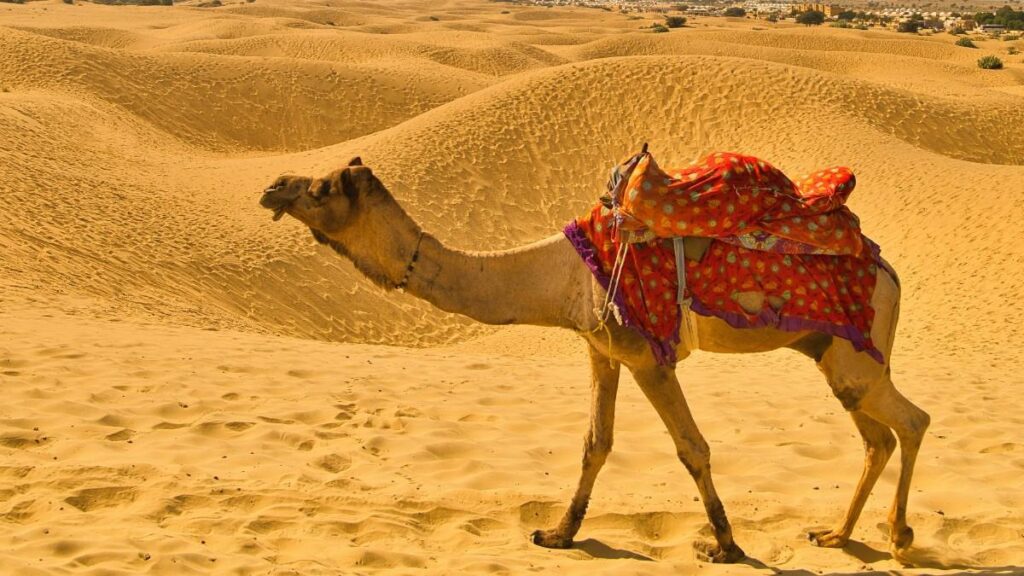
- Days 7 to 8: Jaisalmer — the living fort, Patwon Ki Haveli, and one night at a desert camp at Sam Sand Dunes with a camel safari and folk music.
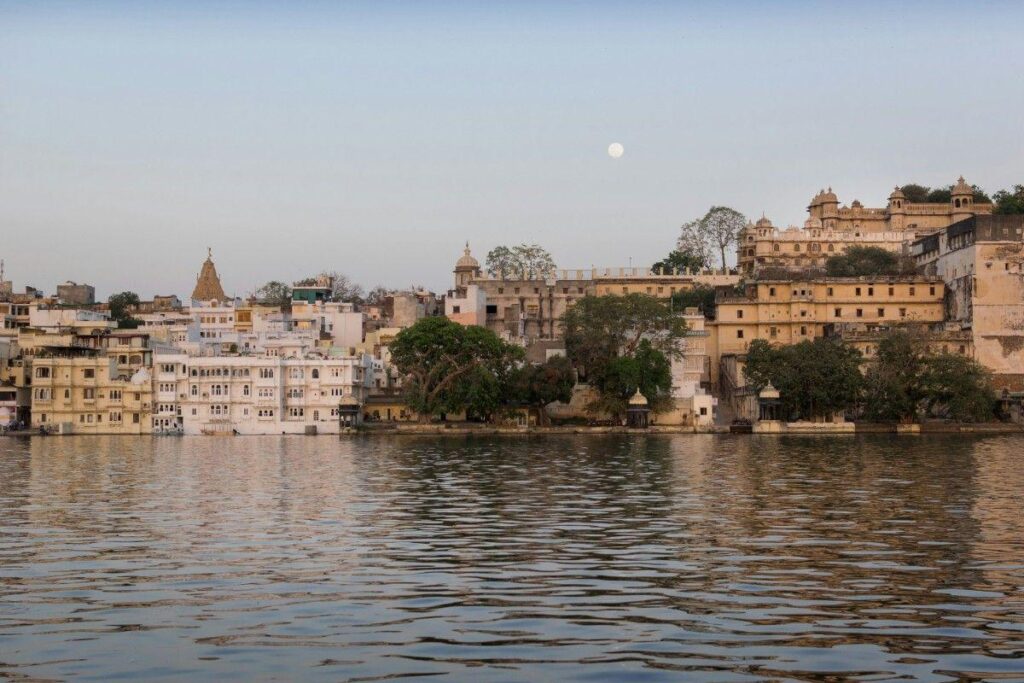
- Days 9 to 10: Udaipur — City Palace, an evening boat ride on Lake Pichola, and a final day of doing absolutely nothing before flying back to Delhi.
The domestic flight from Udaipur to Delhi is the one thing I would call non-negotiable for American travelers. After nine days of long road and train journeys, the last thing you want is an overnight train before a 15-hour international flight home. The domestic flight cost around $55, which is roughly what an Uber to JFK costs, and it bought me an entire extra day of trip.
Budget Breakdown — Real Numbers in US Dollars
I am sharing these numbers because almost every blog I read either rounded up to look impressive or rounded down to look thrifty. This is what I actually spent across ten days on the ground in Rajasthan, in USD — meaning mid-range hostels and one heritage stay, second-class AC trains, street food most days, and a sit-down dinner every second or third evening. International flights, visa, and insurance are listed separately so you can adjust for your departure city and dates.
| Category | Spent (USD) | Notes |
| Inter-city transport in India | $80 | Mix of AC trains, one sleeper bus, one Udaipur–Delhi flight |
| Stays (10 nights) | $175 | Hostels in most cities, 1 heritage haveli in Jodhpur, 1 desert camp at Sam Sand Dunes (~$45) |
| Food | $70 | Mostly street food, lassi stops, 4 sit-down dinners |
| Sightseeing & entry fees | $55 | Foreigner ticket prices add up — Mehrangarh alone is ~$8, Amber Fort, City Palace Udaipur, etc. |
| Local transport (auto, Uber) | $25 | Mostly autos within cities, one bike rental in Pushkar |
| SIM card & data | $8 | Airtel tourist SIM at Delhi airport — far cheaper than US roaming |
| Buffer & souvenirs | $30 | Block-printed scarves, a small painting from Udaipur |
| In-country total | ~$443 | Roughly ₹37,000 INR — does NOT include international flights, visa, or insurance |
| Round-trip flight (NYC–DEL) | $890 | Booked ~10 weeks out, one stop through Doha. Off-peak prices can drop to ~$650. |
| Indian e-Tourist Visa | $26 | 30-day visa ($25) + ~3% bank surcharge |
| Travel insurance | $55 | 10-day policy with medical evacuation cover |
| All-in total | ~$1,414 | Door-to-door for 10 days in Rajasthan from the East Coast |
To put that number in perspective: it is roughly what I would spend on a long weekend in Aspen or four nights at a mid-range hotel on the California coast. The flight is the single biggest line item, and once you are on the ground, daily costs are a fraction of what you would spend traveling domestically in the US.
Four Things I’d Plan Differently Next Time
If there is anything worth taking from this article over a generic itinerary, it is this section. These are the four mistakes I made — small enough that they did not ruin anything, big enough that I would not repeat them.
First, I underestimated travel days. Looking at a map, Jodhpur to Jaisalmer looks like a quick hop. On the ground it is around five hours by train, and that is after you have factored in the auto to the station and the wait for boarding. I also did not realize that foreigners get a separate Foreign Tourist Quota on the IRCTC platform — and that registering with a US phone number is actually the correct way to do it, since an Indian SIM blocks access to that quota. Foreign tourists can book up to 365 days in advance under FT Quota (versus 60 days for general booking), and there is a registration fee plus a ticket service charge. Set up the IRCTC account weeks before you fly, or just use a service like 12Go to sidestep IRCTC entirely.
Second, I booked the desert camp at Sam Sand Dunes only three days in advance. December and January are peak season in Rajasthan, and the better-rated camps were already full. Basic camps run around ₹1,500 per person, and the mid-range ones I wanted were ₹3,500 to ₹7,500 — but those go fast. I ended up at a perfectly fine camp but not the one I had bookmarked. Two weeks of lead time is the right number, especially if you are coming during American winter break.
Third, I packed for the heat and forgot that desert nights in December drop to the low 40s Fahrenheit. I bought a cheap fleece in Jaisalmer that I then carried for the rest of the trip. Pack one warm layer even if you are flying out of a warm US city in winter, and do not assume Rajasthan will be uniformly hot.
Fourth, I did not budget enough rest. With jet lag from a 10.5-hour time difference, I underestimated how much the first three days would take out of me. I had something planned every single day and by Jodhpur I was running on three hours of sleep and a lot of chai. Build in at least one full day with nothing scheduled — Pushkar or Udaipur are good for this — and your last three days will be much better.
Solo Safety Practices That Held Up on the Ground
I will not pretend I am an authority on solo travel safety in India after a single trip, but a few habits I had read about beforehand turned out to genuinely matter. I enrolled in STEP through the State Department before I flew, which meant the US embassy had my itinerary on file. I shared my live location with two people back home every time I changed cities. I avoided arriving at any new station after 9pm and adjusted train bookings to land in the afternoon. I carried a small rubber doorstop for hostel rooms and used it more than I expected to.
If this is your first solo international trip and you are reading this from the US, I would point you toward the broader solo travel resources here on Safe Solo Trip — the practical safety pieces helped me build a routine before I left, and I leaned on that routine more than any single piece of advice about Rajasthan specifically. The trip is the easy part. The habits you bring into it are what make it feel sustainable.
Would I Plan It This Way Again?
Honestly — yes for the route, no for the planning method. The clockwise loop through Jaipur, Pushkar, Jodhpur, Jaisalmer, and Udaipur is, as far as I can tell, the most efficient first-timer’s path through Rajasthan, and I would not change a city on it. But the six weeks I spent stitching together visa paperwork, IRCTC workarounds, hostel reviews, and camel-safari quotes — that, I would do differently.
The trip itself felt like the easy part. The planning was the part that almost made me cancel. Next time, for a shorter trip or one I was organizing for someone else — my parents, say, or a friend who was nervous about logistics — I would seriously think about handing the route over to someone who does this for a living.
Final Thoughts
Rajasthan rewards a trip you can actually be present for, and being present is hard when you are still mentally reconciling three train PNRs, a visa printout, and a hotel cancellation policy across a ten-and-a-half-hour time difference. If I were doing this again with less time on my hands, or planning it for first-timers from the US who would rather not stitch a route together themselves, I would look at a planned Rajasthan itinerary instead, which bundles the route, transport, and English-speaking local guides into one package and would have saved me the six evenings I lost to Booking.com tabs after work. Solo does not have to mean unsupported — and Rajasthan, more than anywhere I have traveled outside the US, is a place worth arriving at without the planning fatigue.